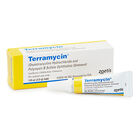
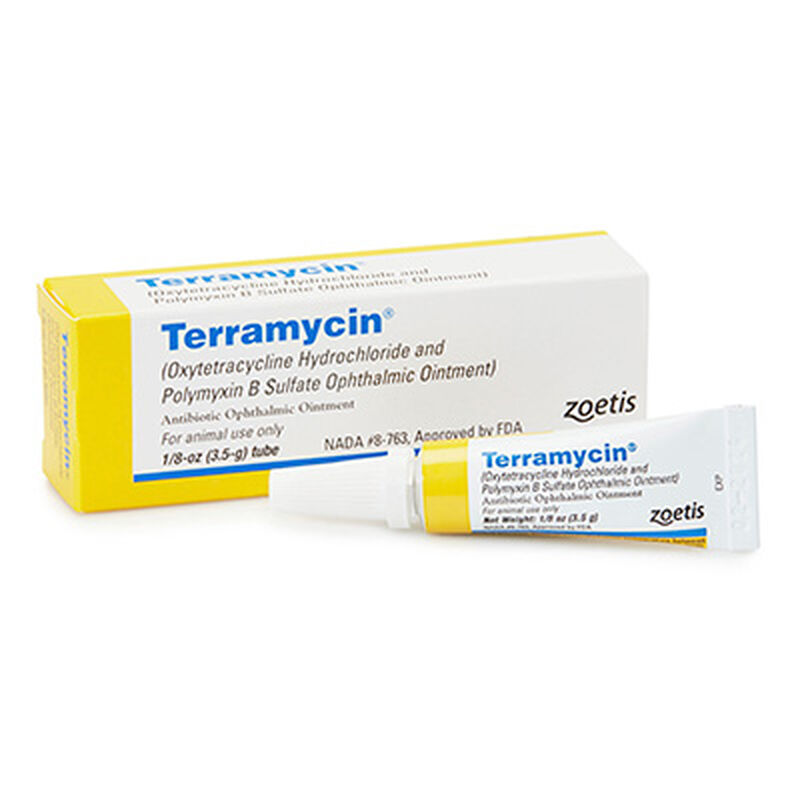
Terramycin (oxytetracycline hydrochloride and polymyxin B sulfate ophthalmic ointment) for Dogs & Cats
-
Veterinary antibiotic ointment for treating eye infections in dogs, cats, cattle, horses, and sheep with active ingredients oxytetracycline hydrochloride and Polymyxin B Sulfate.
-
Treats diseases such as conjunctivitis, keratitis, pink eye, corneal ulcer, blepharitis, and bacterial inflammatory conditions resulting from other infectious diseases. Use only as directed. Consult product instructions for details.
-
Terramycin is a broad-spectrum antibiotic treatment for the eye infections specified on product labeling.
-
Easy to administer with no need for separate applicators or accessories. Apply topically to the eye of the animal 2 to 4 times daily as needed.
-
Contains one 0.125oz/3.5g tube of ointment. For animal use only. Made in Switzerland.
Terramycin (with oxytetracycline hydrochloride and Polymyxin B Sulfate) ophthalmic ointment is an over-the-counter antibiotic treatment for eye infections caused by sensitive bacteria. Approved for use in dogs, cats, cattle, horses, and sheep, this broad-spectrum antibiotic helps combat a variety of eye infections, including pink eye, inflamed cornea, corneal ulcer, and inflammation of the eyelids. Terramycin works effectively to treat eye infections. This medication is applied topically to the eye of the animal. Terramycin requires a prescription in the State of California. AIF-00746R1
IMPORTANT SAFETY INFORMATION:
Serious, life threatening, hypersensitivity (anaphylactic) reactions have been reported in some cats following application of antibiotic ophthalmic preparations. If your cat has swelling of the face, itching, appears weak, vomits, or has difficulty breathing within 4 hours of application you should discontinue treatment and contact your veterinarian immediately. See full Prescribing Information at
TerramycinPI.com.
Note: The use of oxytetracycline and other antibiotics may result in an overgrowth of resistant organisms such as Monilia, Staphylococci, and other species of bacteria. If new infections due to nonsensitive bacteria or fungi appear during therapy, appropriate measures should be taken.
References:
1. Sigmund AB, Ward DA, Cox SK, et al. Tear film concentrations of topically applied 0.5% oxytetracycline ointment in normal canine eyes. Vet Ophthalmol. 2020;23(4):707-713 AR-17165
Product sourced directly from the manufacturer or their approved distributor. Guaranteed genuine product backed by the manufacturer.
For
Dogs, Cats, Horses, Other
Active ingredient(s)
Oxytetracycline hydrochloride, Polymyxin B sulfate
Product class
Combination antibiotic, Ophthalmic ointment
Product strength & size
Each gram of Terramycin Ophthalmic Ointment contains 5 mg of oxytetracycline and 10,000 units of polymyxin B sulfate in a special petrolatum base. Terramycin is supplied in 1/8-oz (3.5-gram) tubes.
Please ensure the selected product and quantity are appropriate for your pet, as recommended by your veterinarian. For current availability, please refer to the product selection above.
Usage
Terramycin Ophthalmic Ointment should be applied to the affected eye(s) as directed by your veterinarian. Please consult your veterinarian before making any changes or discontinuing the prescribed dosing schedule.
Complete the full course of treatment as prescribed, even if your pet's condition improves. Incomplete treatment may result in recurrence or worsening of the infection. Contact your veterinarian ahead of time if your pet needs a refill.
If a dose is missed, administer it as soon as possible. If it is almost time for the next dose, skip the missed dose and continue with the regular schedule. Do not give more medication than prescribed or two doses at once. If you have questions about your pet’s prescribed dosing schedule (e.g., timing, interval), please contact your veterinarian.
General guidelines for ophthalmic administration:
-
Wash your hands thoroughly with soap and water before and after application.
-
Pull your pet’s lower eyelid down gently, then apply the prescribed amount of ointment directly onto the eye or into the conjunctival sac (the pocket between the eyelid and the eyeball).
-
Do NOT allow the tip of the tube to touch any surface, including your hands or your pet’s face and eyes, as this will contaminate the sterile surface.
-
If you are administering multiple eye medications or products, separate doses by at least 5 minutes (or as specifically directed by your veterinarian). The appropriate timing and intervals between administrations may vary depending on your animal’s specific medications and individual needs. In general, eye drops should be used before eye ointments to allow for proper absorption.
Additional information may be provided within the manufacturer’s full Prescribing Information. Always follow the specific instructions provided by your veterinarian regarding your pet's care.
Storage
Store in a cool, dry place at a controlled room temperature between 68° to 77°F, with excursions permitted between 59° to 86°F. Keep this and all other medications in a secure location out of the reach of children and animals. Keep the tube cap tightly closed when not in use.
Exposure to extreme temperatures, light, or moisture can affect the integrity and effectiveness of medications. Always store this medication properly (e.g., away from the bathroom, kitchen sink, or other damp places), as outlined on the product label.
Side effects
Serious side effects are not expected with this medication. Mild stinging or irritation of the eyes may occur in some animals.
The information provided above may not encompass all possible side effects. Please notify your veterinarian if your pet experiences any side effects, including those listed above, or if you notice anything unusual.
Precautions
Before using this product, please review the manufacturer’s full Prescribing Information for any relevant warnings and safety precautions.
For animal use only. Not for human use.
Serious, life threatening, hypersensitivity (anaphylactic) reactions have been reported in some cats following application of antibiotic ophthalmic preparations. If your cat has swelling of the face, itching, appears weak, vomits, or has difficulty breathing within 4 hours of application you should discontinue treatment and contact your veterinarian immediately.
Do not administer this medication to animals with a known or suspected allergy/hypersensitivity to it or any of its ingredients. Allergic reactions to medications may occur. Please inform Vetsource and your veterinarian if your pet has any known sensitivities or allergies, especially to medications and supplements.
If your pet displays symptoms of an allergic reaction, discontinue therapy and call your veterinarian immediately or seek emergency veterinary attention. Symptoms may include (but are not limited to): swollen lips, tongue, face, or airways; difficulty breathing; agitation; profuse salivation; and widespread hives or itching.
Drug and food interactions
There are no documented drug or food interactions reported for this medication.
Medications administered topically to the eyes are not absorbed into the body in the same manner as oral or injectable medications. As a result, information regarding potential drug interactions is often limited; however, interactions may still be possible. As with all medications, please consult your veterinarian if you have any questions or concerns prior to use. Contact your veterinarian if your pet experiences any unusual reactions when multiple medications and/or supplements are given together.
Please ensure your veterinarian is aware of all medications, supplements, and over-the-counter (OTC) products that your pet is currently using. Your veterinarian may prescribe multiple medications, even if a potential drug interaction may occur. In these instances, your veterinarian may adjust the dosages or monitor your pet more closely.
Adverse reactions
If you are concerned that your pet has experienced an adverse reaction to this medication, please contact Zoetis at 1-888-963-8471 or Vetsource Pet Owner Care at 877-738-4443.
Overdose
If you have any reason to suspect accidental consumption or overdose, call your doctor/veterinarian or the appropriate poison control resource immediately.
For humans:
The national toll-free Poison Help line, 1-800-222-1222, will connect you to your local poison center in case of emergency. This service is available nationwide and in most U.S. territories.
For animals:
The ASPCA Animal Poison Control Center is available 24 hours a day, 365 days a year at 888-426-4435.
Pet Poison Helpline also provides a 24/7 animal poison control service at 855-764-7661.
*Please note: The contact information provided above is for third-party services in the event of a potential poison-related emergency. Consultation fees may apply for these services.
Disclaimer
The content provided on this page is NOT medical advice.
All content, including the images and product description above, is intended for general informational purposes only and should not be considered a substitute for professional veterinary consultation, diagnosis, or treatment.
For additional information about this product and how it fits into your pet's individual treatment plan, please consult your veterinarian.
Last revised: 6/15/2026
 Save up to 15% with an Optimum Wellness Plan

 Help
Help
 Prescription required


 Shop
Shop
 Locations/appointments
 Veterinary care
 Ways to get care
 Visit information
 Pet wellness plans
 Virtual petcare
 Pet Chat™ information
 Locations
 MyBanfield
 Shop packages now
 Request information
 Package FAQs
 NEW! Banfield Access Plan
 Pet health articles
 Puppy care
 Kitten care
 Senior care
 Dental care
 Diet and nutrition
 Ear care
 Parasites
 Fleas
Fleas
 Ticks
Ticks
 Mites and mange
 Worms
Worms
 Skin and coat care
 Mobility
 First aid
 Vaccinations
 End of life care
 Traveling with your pet
 Podcast - Not Just Fluff
 Video vault
 About us
 Contact us
 Newsroom
 Our leadership